NONDESTRUCTIVE TESTING HANDBOOK -
Electromagnetic Testing
Manual de Ensaio Não Destrutivo - Ensaio Eletromagnético
- Revisão Histórica
- Geração das Correntes Parasitas
- Intensidade do Campo Magnético
- Densidade da Corrente
- Relações Fase/Amplitude e
Corrente/Relações Temporais
- Teste de Revisão
1 REVISÃO HISTÓRICA
Antes
de discutir os princípios dos ensaios eletromagnéticos, parece
apropriado abordar brevemente as facetas do magnetismo e do
eletromagnetismo que servem de base para este estudo.
No período de 1775 a 1900, os cientistas André-Marie Ampère, François
Arago, Charles Augustin Coulomb, Michael Faraday, Lord William Thomson
Kelvin, James Clerk Maxwell e Hans Christian Oersted investigaram e
catalogaram a maior parte do conhecimento atual sobre magnetismo e
eletromagnetismo.
Arago descobriu que a oscilação de um ímã era rapidamente amortecida
quando um disco condutor não magnético era colocado próximo a ele. Ele
também observou que, ao girar o disco, o ímã era atraído por ele. Na
prática, Arago havia introduzido um campo magnético variável no disco
metálico, causando a formação de correntes parasitas. Isso produzia um
campo magnético secundário no disco que afetava o ímã. O modelo simples
de Arago é a base de muitos velocímetros de automóveis usados
atualmente. Este experimento pode ser modelado como mostrado na
Figura 1.
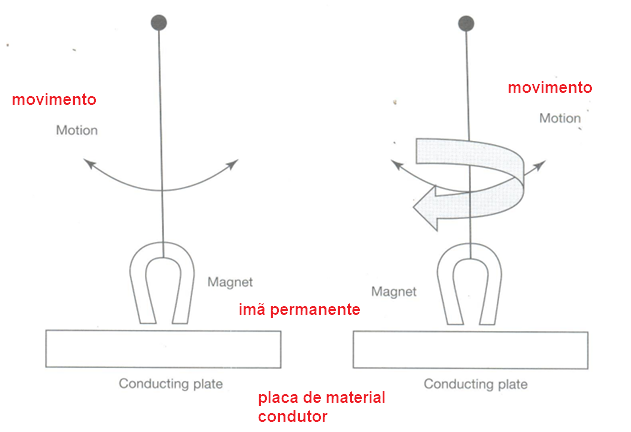
Figura 1: Experiência de Arago (1821).
Oersted
descobriu a presença de um campo magnético ao redor de um condutor
percorrido por corrente elétrica e observou um campo magnético
desenvolvido em um plano perpendicular à direção do fluxo de corrente
em um fio. Ampère observou que correntes iguais e opostas fluindo em
condutores adjacentes cancelavam esse efeito magnético. A observação de
Ampère é usada em aplicações de bobinas diferenciais e para fabricar
resistores de precisão não indutivos.
Os primeiros experimentos de Faraday investigaram correntes induzidas
pelo movimento relativo de um ímã e uma bobina (Figura 2). A principal
contribuição de Faraday foi a descoberta da indução eletromagnética.
Seu trabalho pode ser resumido pelo exemplo mostrado na Figura 3. Uma
bobina, A, está conectada a uma bateria através de uma chave S; uma
segunda bobina, B, conectada a um voltímetro, V, está próxima. Quando a
chave S é fechada, ela produz uma corrente na bobina A na direção
mostrada (a). Uma corrente momentânea também é induzida na bobina B em
uma direção (b) oposta ao fluxo de corrente na bobina A. Se S for agora
aberto, uma corrente momentânea aparecerá na bobina B tendo a direção
de (c). Em cada caso, a corrente flui na bobina B apenas enquanto a
corrente na bobina A está mudando. 'A força eletromotriz (tensão)
induzida na bobina B da Figura 3 pode ser expressa da seguinte forma:
(Eq.1) 
onde:
E = voltagem média induzida
N = número de espiras da bobina B
ΔΦ/Δt = taxa de mudança das linhas magnéticas de força afetando a
bobina B
K = 108
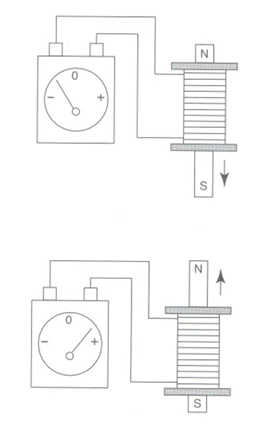
Figura 2. Corrente Induzida com Imã Permanente e Bobina.
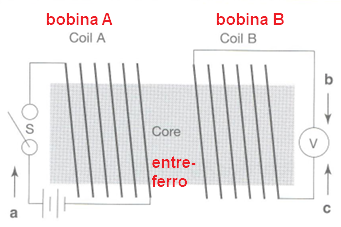
Figura 3. Método Eletromagnético de Induzir Corrente.
Maxwell
produziu uma obra em dois volumes, Um Tratado sobre Eletricidade e
Magnetismo, publicada pela primeira vez em 1873. Maxwell não apenas
registrou a maior parte do trabalho realizado em eletricidade e
magnetismo naquela época, mas também desenvolveu e publicou um conjunto
de relações conhecido como as equações de Maxwell para o campo
eletromagnético. Essas equações formam a base que descreve
matematicamente a maior parte do que se sabe sobre eletromagnetismo
hoje. Em 1849, Lord Kelvin aplicou a equação de Bessel para resolver os
elementos de um campo eletromagnético. Os princípios dos testes
eletromagnéticos dependem do processo de indução eletromagnética. Esse
processo inclui uma bobina de teste através da qual passa uma corrente
variável ou alternada. Uma corrente variável que flui em uma bobina de
teste produz um campo eletromagnético variável ao redor da bobina. Esse
campo é conhecido como campo primário.
2 GERAÇÃO DAS CORRENTES PARASITAS
Quando
um objeto ensaiado eletricamente condutor é colocado no campo primário,
uma corrente elétrica é induzida nesse objeto. Essa corrente é
conhecida como corrente parasita. A Figura 4 é um modelo simples que
ilustra as relações entre os eventos eletromagnéticos primários e
secundários. O condutor A representa uma porção de uma bobina de
ensaio. O condutor B representa uma porção de um objeto ensaiado.
Seguindo a lei de Lenz e indicando a direção instantânea da corrente
primária (Ip), um campo primário (Φp) é
desenvolvido ao
redor do
condutor A. Quando o condutor B é colocado sob a influência de Iρ,
uma
corrente de Foucault (IE) é induzida no condutor B. Essa
corrente (IE)
produz um campo eletromagnético secundário (ΦE) que se opõe
ao
campo
eletromagnético primário (Φρ). A magnitude de ΦE
é diretamente
proporcional à magnitude de IE.
Alterações nas características do
condutor B, como condutividade, permeabilidade ou geometria, farão com
que IE varie. Quando IE varia, ΦE
também varia. Variações de IE
são
refletidas no condutor A por meio de mudanças em Φp.
Essas mudanças são
detectadas e exibidas em algum tipo de mecanismo de leitura que
relaciona essas variações à característica de interesse.

Figura 4: Relações da corrente induzida.
3. INTENSIDADE DO CAMPO
O
campo eletromagnético produzido em torno de uma bobina de ensaio sem
carga pode ser descrito como tendo intensidade decrescente com a
distância da bobina e também variando ao longo da seção transversal da
bobina. O campo é mais intenso próximo à superfície da bobina.
O campo produzido em torno desta bobina é diretamente proporcional à
magnitude da corrente aplicada, à taxa de variação da corrente ou
frequência e aos parâmetros da bobina. Os parâmetros da bobina incluem
indutância, diâmetro, comprimento, espessura, número de espiras do fio
e material do núcleo.
Para melhor compreender os princípios em discussão, é importante
observar novamente as relações instantâneas entre corrente e fluxo
magnético. A corrente de excitação é fornecida à bobina por um gerador
ou oscilador de corrente alternada.
Com uma corrente primária Ip fluindo através da bobina, um
campo
eletromagnético primário Φp
é produzido em torno da bobina.
Quando esta
bobina de ensaio excitada é colocada sobre um objeto ensaiado
eletricamente condutor, correntes parasitas IE serão geradas
nesse
objeto ensaiado. A Figura 5 ilustra este conceito.

Figura 5: Geração das correntes parasitas em um objeto ensaiado.
Observe a direção da
corrente primária (Ip) e a corrente parasita resultante (IE).
A
corrente parasita Ip
estende-se por uma certa distância para dentro do
objeto ensaiado. Outra observação importante é que IE
é gerado no mesmo
plano em que a bobina é enrolada. A Figura 6 enfatiza esse ponto com
uma bobina em forma de laço envolvendo um objeto de teste cilíndrico.

Figura 6: Fluxo de corrent einduzida em uma peça cilíndrica.
Um método mais preciso para descrever as relações entre fluxo
magnético, tensão e corrente é o diagrama vetorial de fase ou diagrama
fasorial. A Figura 7 compara os eventos eletromagnéticos associados a
uma bobina de ensaio sem carga e o que acontece quando essa mesma
bobina
é colocada em um objeto de ensaio não ferromagnético. Os componentes
dos
diagramas fasoriais são os seguintes:

Figura 7(a): Diagrma de fase e voltagem na
bobina (a) sem objeto ensaiado.
Ep = voltagem primária na bobina
I= corrente de excitação
ΦP = fluxo magnético primário
ΦS = fluxo magnético secundário

Figura 7(b): Diagrma de fase e voltagem na bobina
(a) com objeto ensaiado.
Ep = voltagem primária na bobina
I= corrente de excitação
ΦP = fluxo magnético primário
ES = voltagem secundária na bobina
ΦS = fluxo magnético secundário
ET = voltagem total na bobina
ΦT = fluxo magnético total
Na Figura 7(a), a corrente (I) e
o fluxo magnético primário (ΦP)
são plotados em fase. A tensão primária
(Ep)
é mostrada separada por 90 graus elétricos. O fluxo magnético
secundário ((ΦS)
é representado em zero porque, sem um objeto de ensaio, não existe
fluxo secundário.
A Figura 7(b) representa a ação de
colocar a bobina sobre um objeto de ensaio não ferromagnético.
Observando a Figura 7(b), pode-se ver, pela adição vetorial de Ep
e ES
que uma nova tensão na bobina (ET)
é obtida para a condição carregada.
O fluxo magnético primário
ΦP
e o fluxo magnético secundário
ΦS
também
são combinados por adição vetorial para se obter um novo fluxo
magnético (ΦT)
para a bobina carregada. Observe que, para a condição do
objeto de teste na bobina de ensaio, ΦT
não está mais em fase com a
corrente de excitação I. Observe também que o ângulo formado entre a
corrente de excitação e a nova tensão da bobina
ET
não é mais de 90
graus elétricos. Essas interações serão discutidas em detalhes
posteriormente neste guia de estudo.
4. DENSIDADE DE CORRENTE
A
distribuição de correntes parasitas em um objeto ensaiado varia
exponencialmente. A densidade de corrente no objeto ensaiado é maior
perto da bobina de teste. Essa densidade de corrente exponencial segue
as regras matemáticas de uma curva de decaimento exponencial natural
(1/ε), onde ε
(epsilon) é 2,718. Normalmente, uma curva
exponencial
natural é ilustrada por um gráfico com a ordenada (eixo Y)
representando a intensidade (magnitude) e a abscissa (eixo X)
representando o tempo
ou a distância.
Um ponto comum descrito em tal gráfico é o "joelho" da
curva. O joelho ocorre no valor de 37% no eixo da ordenada. Esse ponto
de 37% é escolhido porque as mudanças nos valores do eixo X produzem
mudanças significativas nos valores do eixo Y de 100% a 37% e, abaixo
de 37%, as mudanças nos valores do eixo X produzem mudanças menos
significativas nos valores do eixo Y.
Aplicando essa lógica aos ensaios
eletromagnéticos, um termo é desenvolvido para descrever a distribuição
de corrente no objeto ensaiado. A corrente de Foucault gerada na
superfície do objeto de ensaio mais próxima da bobina de teste é de
100%. O ponto na espessura do objeto ensaido onde essa corrente é
reduzida para 37% de sua intensidade anterior é conhecido como
profundidade padrão de penetração. A letra grega δ (delta) é usada para
representar esse ponto no material. A Figura 8 mostra uma curva de
densidade de corrente de Foucault relativa para uma onda plana de
extensão infinita com campo magnético paralelo à superfície condutora
do objeto ensaiado.

Figura 8: Densidade relativa da corrente parasita.
A densidade de corrente em qualquer profundidade
pode ser calculada como:
(Eq. 2)
Onde:
Jx = densidade de corrente a profundidade x
Jo = densidade de corrente na superficie, A/m2
Π = 3,1416
f = frequência em hertz
μ = permeabilidade magnética absoluta, H/m
x = profundidade a partir da superfície, m
σ = condutividade elétrica, S/m
e = 2,718
A
permeabilidade magnética
μ
é uma combinação
de termos. Para materiais não magnéticos:
(Eq. 3) μ = 4Π X 10-7 H/m
Para materiais magnéticos:
μ = μr
X μo
Onde:
μr = permeabilidade relativa
μo = 4Π X 10-7 H/m
A profundidade padrão de penetração pode ser calculada como segue:
(Eq. 4)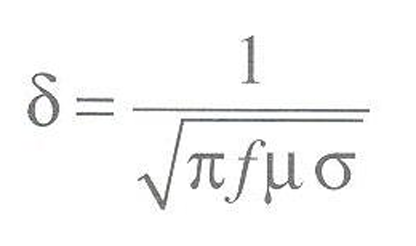
Onde:
δ = profundidade padrão de penetração, m
Π = 3,1416
f = frequência em hertz
μ = permeabilidade magnética absoluta, H/m
σ = condutividade elétrica, S/m
Deve-se observar neste ponto
que, à medida que a frequência, a condutividade ou a permeabilidade
aumentam, a penetração da corrente no objeto ensaiado diminui.
O
gráfico da Figura 8 é usado para demonstrar muitas características das
correntes de Foucault. Usando como exemplo um bloco muito espesso de
aço inoxidável sendo inspecionado com uma bobina superfícial operando a
uma frequência de ensaio de 100 kHz, a profundidade padrão de
penetração pode ser determinada e as densidades de corrente
observadas em outras profundidades.
O aço inoxidável (série 300) não é
ferromagnético. A permeabilidade magnética é de 4 x 10⁻⁷ H/m e a
condutividade é de 0,14 x 10⁻⁷ siemens (mhos) por metro para o aço
inoxidável da série 300.

Usando 1,35 mm como profundidade x a partir da
superfície, a relação profundidade/profundidade padrão de penetração seria 1.
Consulte a Figura 8, uma relação profundidade/profundidade padrão de penetração
de 1 indica uma densidade relativa de correntes parasitas de 0,37 ou
37%. Qual é a densidade relativa de correntes parasitas a 3 mm?
A
profundidade x é igual a 3 mm e a profundidade de penetração é 1,35 mm;
portanto:
3 + 1,35 = 2,222.
Essa relação indica uma densidade relativa
de correntes parasitas de cerca de 0,1 ou 10%. Com apenas 10% da
corrente disponível fluindo a uma profundidade de 3 mm, variáveis
como condutividade, permeabilidade e descontinuidades seriam muito
difíceis de detectar. A solução óbvia para maior detectabilidade na
profundidade de 3 mm é diminuir a frequência do ensaio. A seleção da
frequência será abordada em detalhes posteriormente neste texto.
5. RELAÇÕES FASE/AMPLITUDE E TEMPO/CORRENTE
A
Figura 9 revela outra faceta das
correntes parasitas. As correntes parasitas não são geradas no mesmo
instante em toda a peça. Elas precisam de tempo para penetrar na peça
em teste. Fase e tempo são análogos, pois fase é um termo elétrico
usado para descrever as relações temporais das formas de onda
elétricas.

Figura 9: Defasagem angular
A fase geralmente é expressa em graus ou radianos. Há 2Π
radianos em 360°. Cada radiano, portanto, corresponde a cerca de 57°.
Usando a corrente parasita superficial próxima à bobina de ensaio como
referência, as correntes parasitas que ocorrem mais profundamente no
objeto ensaiado ficam defasadas em relação à corrente superficial. A
quantidade de defasagem de fase é determinada por:
(Eq. 5)
Onde:
Θ = defasagem ângular em radianos
X = profundidade de interesse abaxio da superfície do objeto ensaiado
Π = 3,1416
f = frequência em hertz
μ = permeabilidade magnética absoluta, H/m
σ = condutividade elétrica, S/m
A Figura 9 deve ser
usada como um indicador relativo da defasagem, expressa como
profundidade de interesse X dividida pela profundidade padrão de
penetração. A relação de
fase exata para um sistema específico pode ser diferente devido a
outras variáveis, como parâmetros da bobina e métodos de excitação.
A
quantidade de defasagem para uma determinada espessura da peça
é um fator importante ao se considerar a resolução. Resolução é a
capacidade de separar variáveis que ocorrem no objeto ensaiado; por
exemplo, distinguir duas descontinuidades que ocorrem em diferentes
profundidades no mesmo objeto ensaiado.
Como exemplo, usando uma
profundidade de penetração padrão de 1 mm em um objeto ensaiado com 5
mm de espessura, consulte a Figura 9 e observe a defasagem da corrente
em uma profundidade de penetração padrão. Onde a profundidade de
interesse X é 1 mm e a profundidade de penetração δ é 1 mm, a razão
X/δ
é 1 e a corrente na profundidade X atrasa a corrente da superfície em 1
radiano ou 57°.
Planejando este ensaio, observe a defasagem para toda a
espessura da peça. A profundidade de penetração padrão é 1 mm e a
espessura da peça é 5 mm; portanto, a razão X/δ
é igual a 5. Isso
produz uma defasagem de 5 radianos ou cerca de 287° para a espessura da
peça. Tendo uma capacidade de medição com incrementos de 1°, a
espessura da peça poderia ser dividida em 287 partes, cada parte
representando 0,017 mm. Isso seria considerado uma excelente resolução.
Existe uma limitação óbvia. Consulte a Figura 8 e observe a densidade
de corrente relativa resultante com uma relação X/δ
igual a 5. A densidade
de corrente relativa será próxima de 0.
Deve tornar-se aparente que a
frequência pode ser ajustada para obter resultados ótimos para uma
determinada variável. Essas e outras variáveis serão discutidas no
Capítulo 5 deste guia de estudo.
Em resumo, as correntes parasitas
foram explicadas, assim como sua criação e propagação em materiais
eletricamente condutores. Uma vez compreendida a aplicação prática
desses princípios, os ensaios eletromagnéticos podem ser utilizados em
uma ampla gama de aplicações de inspeção em materiais eletricamente
condutores para:
- medir
o tamanho ou a forma das peças;
- medir
variações metalúrgicas ou na composição química (liga) dessas peças;
- determinar
se e como essas peças foram tratadas termicamente;
- auxiliar
na identificação de descontinuidades de fabricação que
precisam ser corrigidas; e
- determinar
se existem descontinuidades
induzidas pelo uso que podem limitar a utilização da peça.
6. TESTE DE REVISÃO
|